Your Cedar tree leaves facts images are ready in this website. Cedar tree leaves facts are a topic that is being searched for and liked by netizens now. You can Download the Cedar tree leaves facts files here. Download all royalty-free vectors.
If you’re looking for cedar tree leaves facts pictures information related to the cedar tree leaves facts interest, you have come to the ideal site. Our site always gives you suggestions for seeking the highest quality video and picture content, please kindly search and find more informative video content and images that fit your interests.
Cedar Tree Leaves Facts. Lebanon cedar Cedrus libaniApart from these true cedars some groups of trees and plants are also commonly described as a cedar in the US. Here is some detailed information on cedar trees. A solitary tree may have a crown that reaches the ground but where trees have grown close together the crown will only be at the top where it can get enough light. Thuja plicata is an evergreen coniferous tree in the cypress family Cupressaceae native to western North AmericaIts common name is western redcedar western red cedar in the UK and it is also called Pacific redcedar giant arborvitae western arborvitae just cedar giant cedar or shinglewood.
 Cedar Tree History Facts Cedrus Libani Graftingardeners Ltd From graftingardeners.co.uk
They are found at heights of 15003200 metres 490010500 ft in the Himalaya and 10002200 metres 3300. Its a serious disease caused by the fungus Sirococcus tsugae. Native to North America the white cedar is part of the Cupressaceous family. They are native to the mountains of the western Himalaya and the Mediterranean region. Enjoy these pictures of cedar trees. Cedar Facts follow to cedar tree facts section.
Nootka cypress or the yellow cedar is a somewhat similar plant to the red cedar.
Cyprus cedar Cedrus brevifoliaDeodar cedar Cedrus deodara. The western red cedar can grow to a giant size from 65 to 70m 210 to 230ft tall with trunks that can range 3 to 7m 10 to 23ft in diameter. The canopy of the white cedar tree can spread up to 12 feet. Spherical or ovoid about 8-40 mm long with 4-14 scales laid out in decussate pairs. Cedar Tree Pictures Facts on Cedar Trees. They are native to the mountains of the western Himalaya and the Mediterranean region.
Source: graftingardeners.co.uk
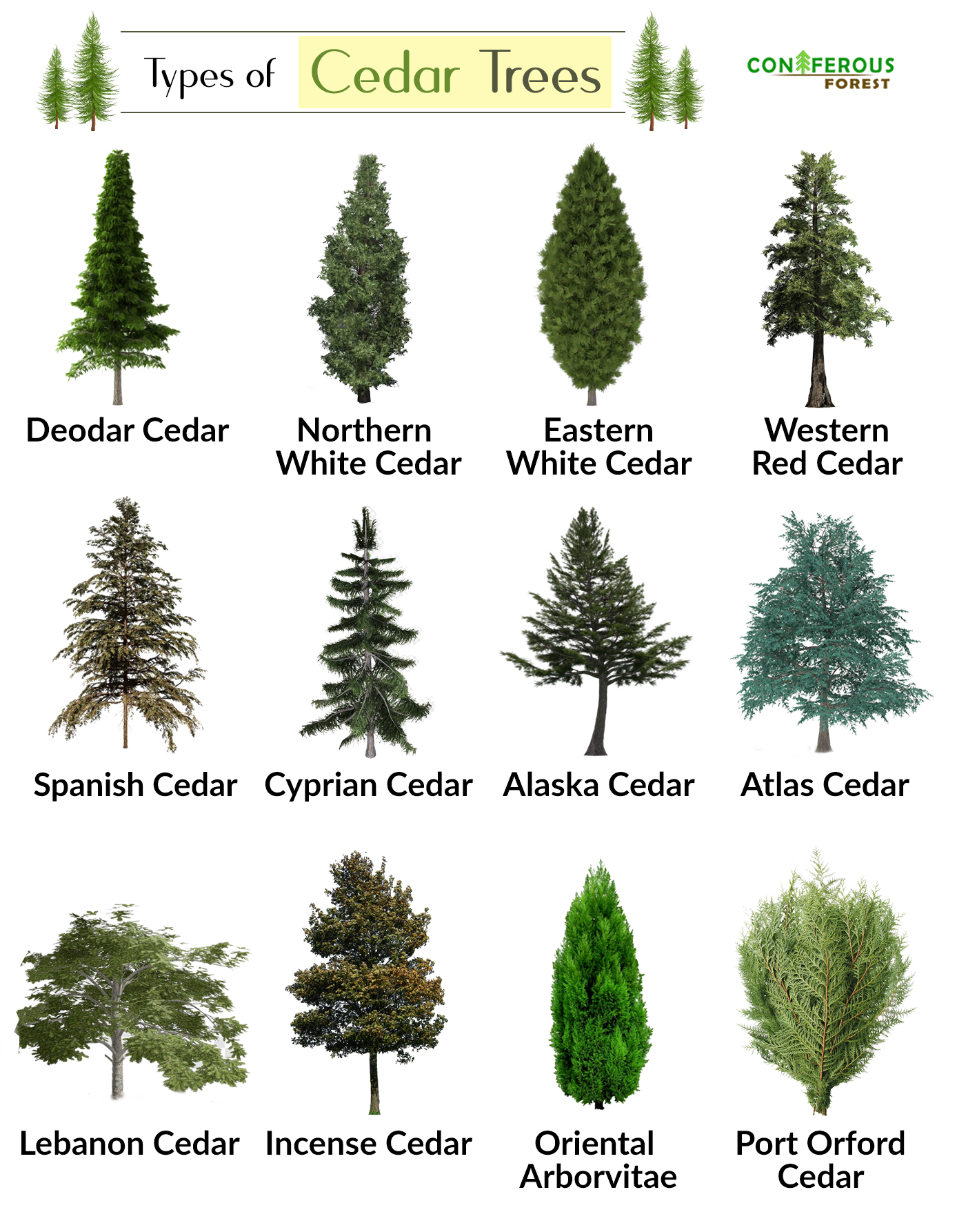
List of Different Types of Cedar Trees. Here is some. Eastern and western red cedar trees play vital roles within their. It has been commonly used as a street tree in the desert southwest due to its ability to survive in difficult soil types with very little care. It also has pendulous branches.
 Source: pinterest.com
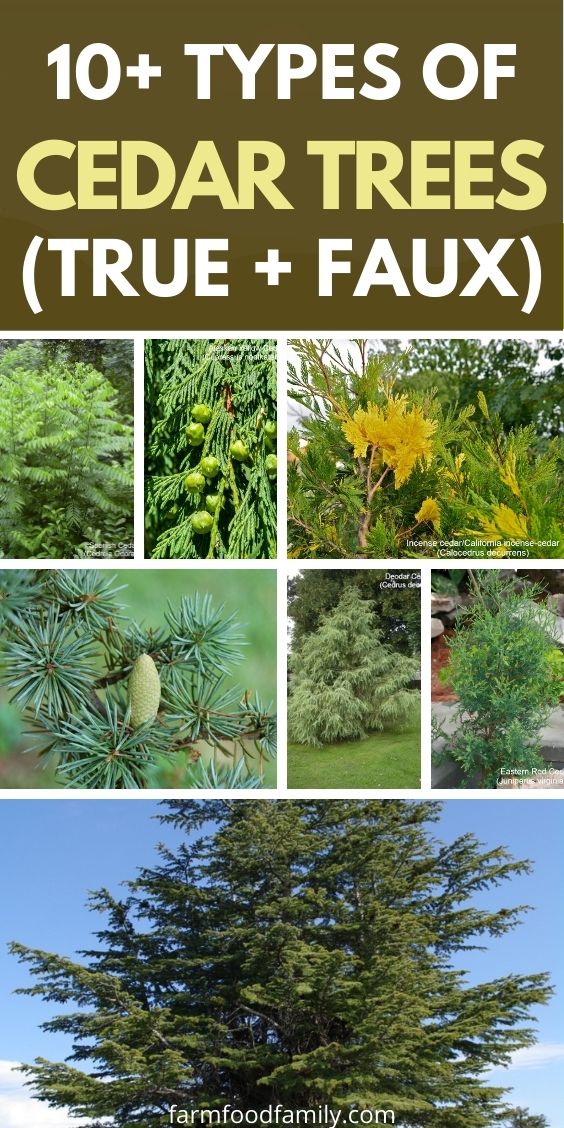
Nootka cypress or the yellow cedar is a somewhat similar plant to the red cedar. The canopy of the white cedar tree can spread up to 12 feet. What are known as Cedar trees belong to more than three different plant families ranging from the Lebanon Cedar Eastern Red Cedar to Australian Red Cedar and more than 27 other species. Cedar originates from Himalayas and Mediterranean region but it can be found in the areas with temperate climate around the world today. Northern white cedar also called swamp cedar is an evergreen species of conifers found in eastern Canada and many places in the United States.
 Source: farmfoodfamily.com
Phoenicians used to export cedar trees to Egypt and got a huge price in return even before they reached the peak of their trading capabilities. Cedar scientific name Cedrus is a genus of cone-bearing trees in the plant family Pinaceae. Some specimens of western red cedar can live to be over a thousand years old. Greenish-yellow leaves are flat with opposite scales. Eastern and western red cedar trees play vital roles within their.
 Source: gardenerdy.com
There are many types of cedar trees. Native to North America the white cedar is part of the Cupressaceous family. Facts and Information on Cedar Trees. Cedar Tree comments can be found at cedar tree comments. Cedar Tree Pictures Facts on Cedar Trees.
 Source: gardeningknowhow.com
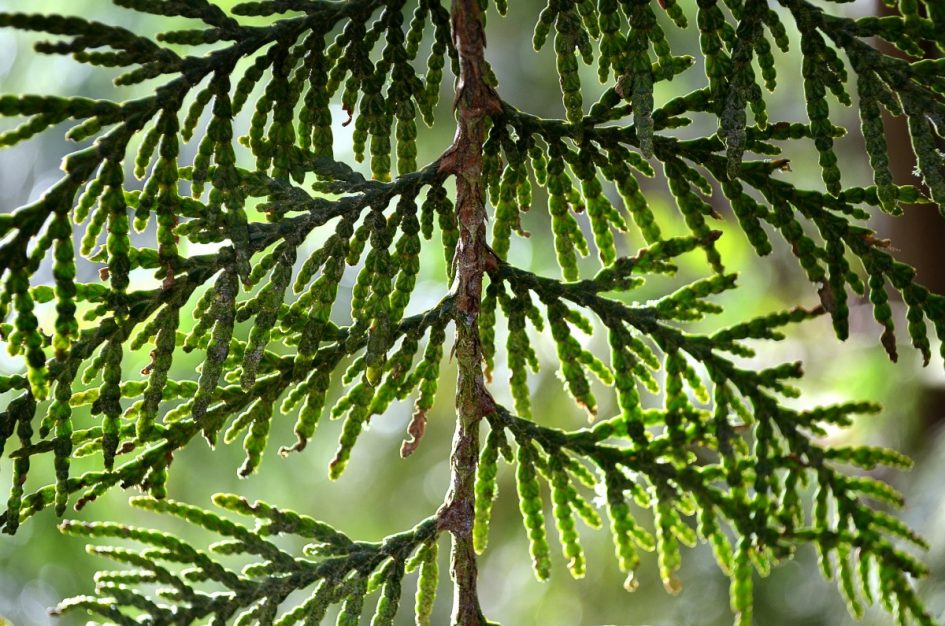
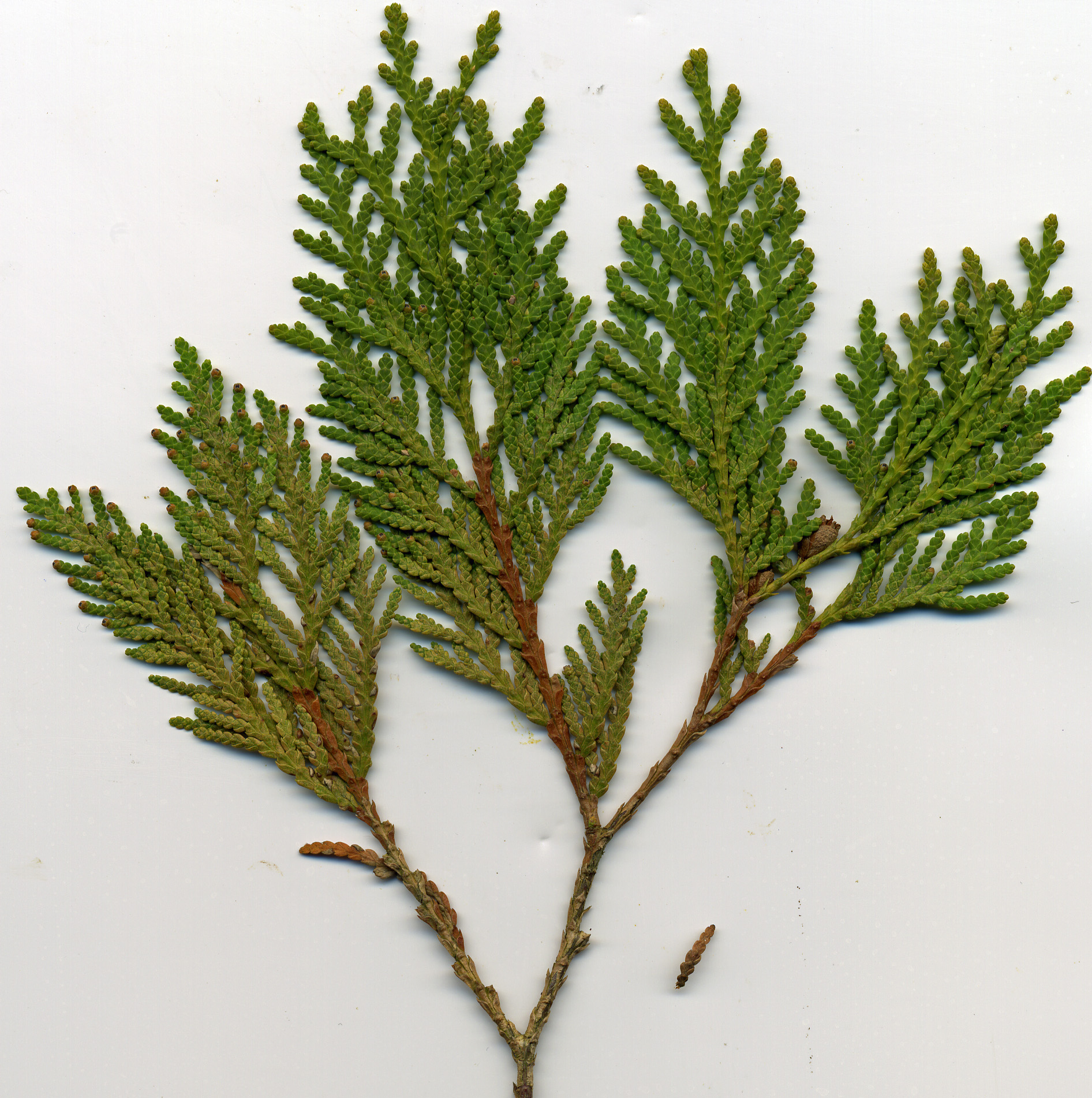
Scale-like opposite pairs intersect each other about 2-6 mm long. Nootka cypress or the yellow cedar is a somewhat similar plant to the red cedar. A tall conical evergreen tree reaching up to 65m. Greenish-yellow leaves are flat with opposite scales. Scale-like opposite pairs intersect each other about 2-6 mm long.
 Source: coniferousforest.com
Lebanon cedar Cedrus libaniApart from these true cedars some groups of trees and plants are also commonly described as a cedar in the US. Historically First Nations people made use of both plants. It is pyramidal in shape with a broad trunk and dense fern-like foliage. Bears skunks and raccoons make their dens in the trees trunks cavities while many birds also build their nests on this tree. Cedar Facts follow to cedar tree facts section.
 Source: pinterest.com
Since its barks twigs and sap are believed to have medicinal properties it is named arborvitae in Latin meaning tree of life Although northern white cedar is closely related to western. Cedar originates from Himalayas and Mediterranean region but it can be found in the areas with temperate climate around the world today. What are known as Cedar trees belong to more than three different plant families ranging from the Lebanon Cedar Eastern Red Cedar to Australian Red Cedar and more than 27 other species. Facts About Cedar Trees. The needles of affected trees turn pink and drop off their shoots die and they ooze a gum-like fluid.
 Source: sites.evergreen.edu
Known for its graceful appearance and being incredibly strong for its small to medium size the red cedar is found in the eastern and northern states of America. Thuja plicata is an evergreen coniferous tree in the cypress family Cupressaceae native to western North AmericaIts common name is western redcedar western red cedar in the UK and it is also called Pacific redcedar giant arborvitae western arborvitae just cedar giant cedar or shinglewood. Facts About Cedar Trees. Spherical or ovoid about 8-40 mm long with 4-14 scales laid out in decussate pairs. Timber from Spanish cedar trees is high-quality and resistant to insects and decay.
 Source: pinterest.com
They are found at heights of 15003200 metres 490010500 ft in the Himalaya and 10002200 metres 3300. Facts About Cedar Trees. The cedar tree comes in good use of wild animals. This false cedar tree procures white flowers before maturing into small winged-shaped fruits. Cedar can be affected by Sirococcus blight of cedar.
 Source: pinterest.com
Cedar oil is the essential oil extracted from the leaves and wood. It is pyramidal in shape with a broad trunk and dense fern-like foliage. To learn more about cedar tree care or how to grow cedar trees you may find the following information helpful. Thuja plicata is an evergreen coniferous tree in the cypress family Cupressaceae native to western North AmericaIts common name is western redcedar western red cedar in the UK and it is also called Pacific redcedar giant arborvitae western arborvitae just cedar giant cedar or shinglewood. Heres a whirlwind tour of interesting cedar tree facts for those of you in love with these beautiful green giants.
 Source: pinterest.com
Atlas cedar Cedrus atlantica. The slow-growing evergreen does best in United States Department of Agriculture hardiness zones 2 to 7. Bears skunks and raccoons make their dens in the trees trunks cavities while many birds also build their nests on this tree. Cedar originates from Himalayas and Mediterranean region but it can be found in the areas with temperate climate around the world today. It can reach heights of 25 to 40 feet when it reaches full maturity.
 Source: pinterest.com
Cedar Tree comments can be found at cedar tree comments. Attractive and normally trouble-free cedar trees can be great additions to the landscape. White Cedar Facts. The canopy of the white cedar tree can spread up to 12 feet. Spherical or ovoid about 8-40 mm long with 4-14 scales laid out in decussate pairs.
 Source: pinterest.com
Timber from Spanish cedar trees is high-quality and resistant to insects and decay. It was first found in England in 2013 and has since been confirmed in Wales and Scotland. Some specimens of western red cedar can live to be over a thousand years old. They are native to the mountains of the western Himalaya and the Mediterranean region. Cedar is an evergreen tree that belongs to the family of pines term cedar tree is sometimes used to describe more than 30 species of plants that belong to three different families.
 Source: pinterest.com
However the Spanish faux cedar is a semi-deciduous broad-leafed tree with ovate leaflets making up the leaves. The cedar tree comes in good use of wild animals. However the Spanish faux cedar is a semi-deciduous broad-leafed tree with ovate leaflets making up the leaves. Here is some detailed information on cedar trees. It is pyramidal in shape with a broad trunk and dense fern-like foliage.
 Source: pinterest.com
Lebanon cedar Cedrus libaniApart from these true cedars some groups of trees and plants are also commonly described as a cedar in the US. The cedar tree comes in good use of wild animals. Cyprus cedar Cedrus brevifoliaDeodar cedar Cedrus deodara. It is not a true cedar of the genus Cedrus. All cedars are large coniferous evergreen trees.
This site is an open community for users to share their favorite wallpapers on the internet, all images or pictures in this website are for personal wallpaper use only, it is stricly prohibited to use this wallpaper for commercial purposes, if you are the author and find this image is shared without your permission, please kindly raise a DMCA report to Us.
If you find this site good, please support us by sharing this posts to your own social media accounts like Facebook, Instagram and so on or you can also save this blog page with the title cedar tree leaves facts by using Ctrl + D for devices a laptop with a Windows operating system or Command + D for laptops with an Apple operating system. If you use a smartphone, you can also use the drawer menu of the browser you are using. Whether it’s a Windows, Mac, iOS or Android operating system, you will still be able to bookmark this website.