Your Fire blight cherry tree images are ready in this website. Fire blight cherry tree are a topic that is being searched for and liked by netizens now. You can Download the Fire blight cherry tree files here. Get all free photos and vectors.
If you’re looking for fire blight cherry tree pictures information linked to the fire blight cherry tree topic, you have pay a visit to the ideal blog. Our website frequently provides you with suggestions for seeing the maximum quality video and picture content, please kindly surf and find more enlightening video articles and graphics that fit your interests.
Fire Blight Cherry Tree. Apple crabapple Malus species and firethorns Pyracantha species also are frequently damaged. Leaves with many leaf spots turn yellow and fall off the tree. This video is part of the Tree Fruit Disease Management Series produced by Michigan State University Professor and Extension Specialist Dr. Leaf spot can be severe in one area and absent a few miles away.
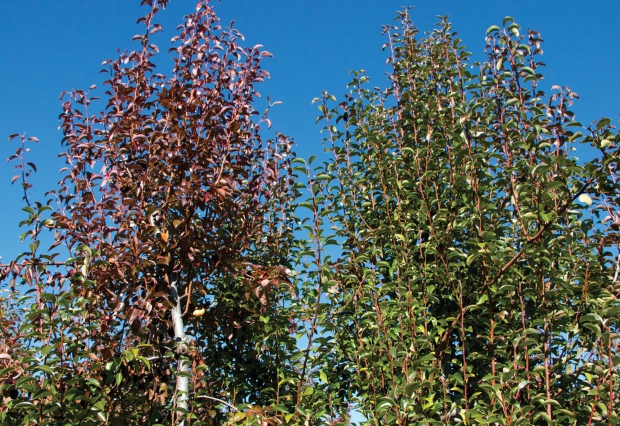 New Era In Fire Blight Control Good Fruit Grower From goodfruit.com
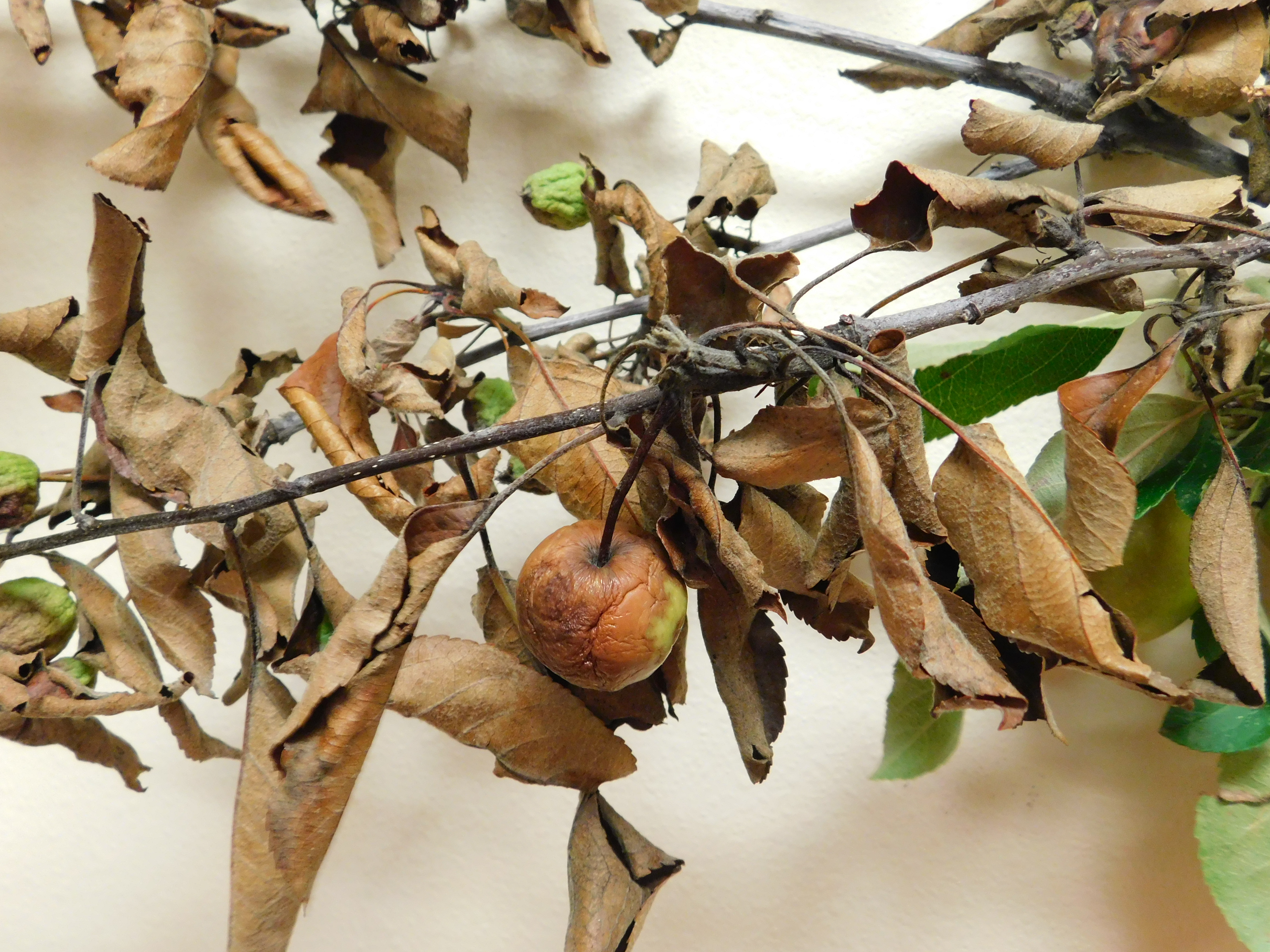
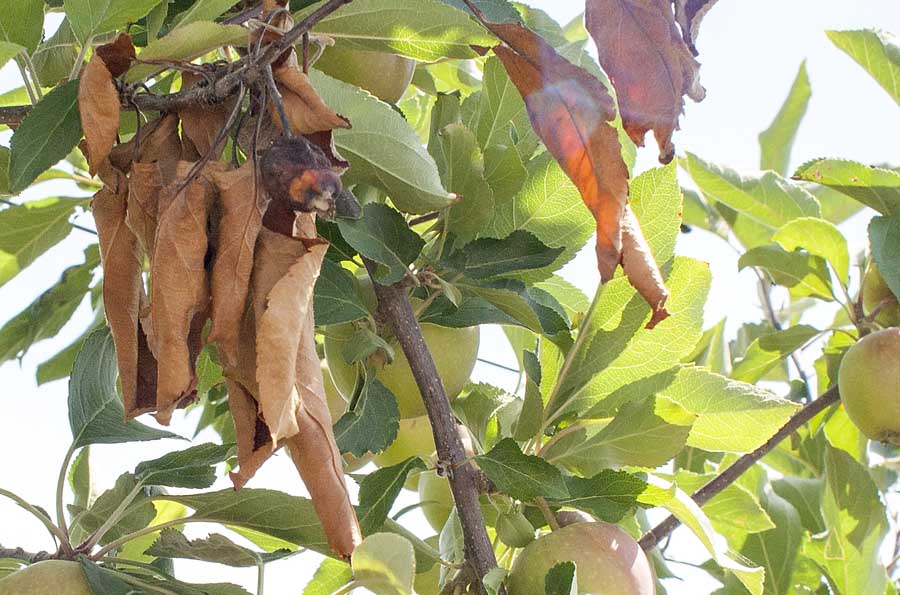
The blighted blossoms and leaves tend to stay on the tree instead of falling. Fire blight is a disease that can kill blossoms and shoots and cause dieback of branches from cankers. Cherry leaf spot can be a devastating disease for tart cherries. The bacterium Erwinia amylovora causes fire blight in cherry laurel trees. Cankers on a trees bark that look like discolored or wet patches often with areas of dead or decayed sapwood around their. Trees that lose many leaves.
Fire blight found in a variety.
Minimizing rapid growth and succulent tissue will reduce the risk of fire blight developing on the susceptible young succulent tissue. Examples include strawberries raspberries roses apple trees pear trees and other members of the Rosaceae family. Cankers on a trees bark that look like discolored or wet patches often with areas of dead or decayed sapwood around their. Apple pear hawthorn cotoneaster firethorn and mountain ash. Fire blight is a destructive disease caused by a bacterium Erwinia amylovora that thrives in the warm humid and rainy weather that coincides with the start of the growing season and it is easily spreadYou can identify fire blight by several characteristics. Recognize it by the cankers that often ooze sap.
 Source: hgic.clemson.edu
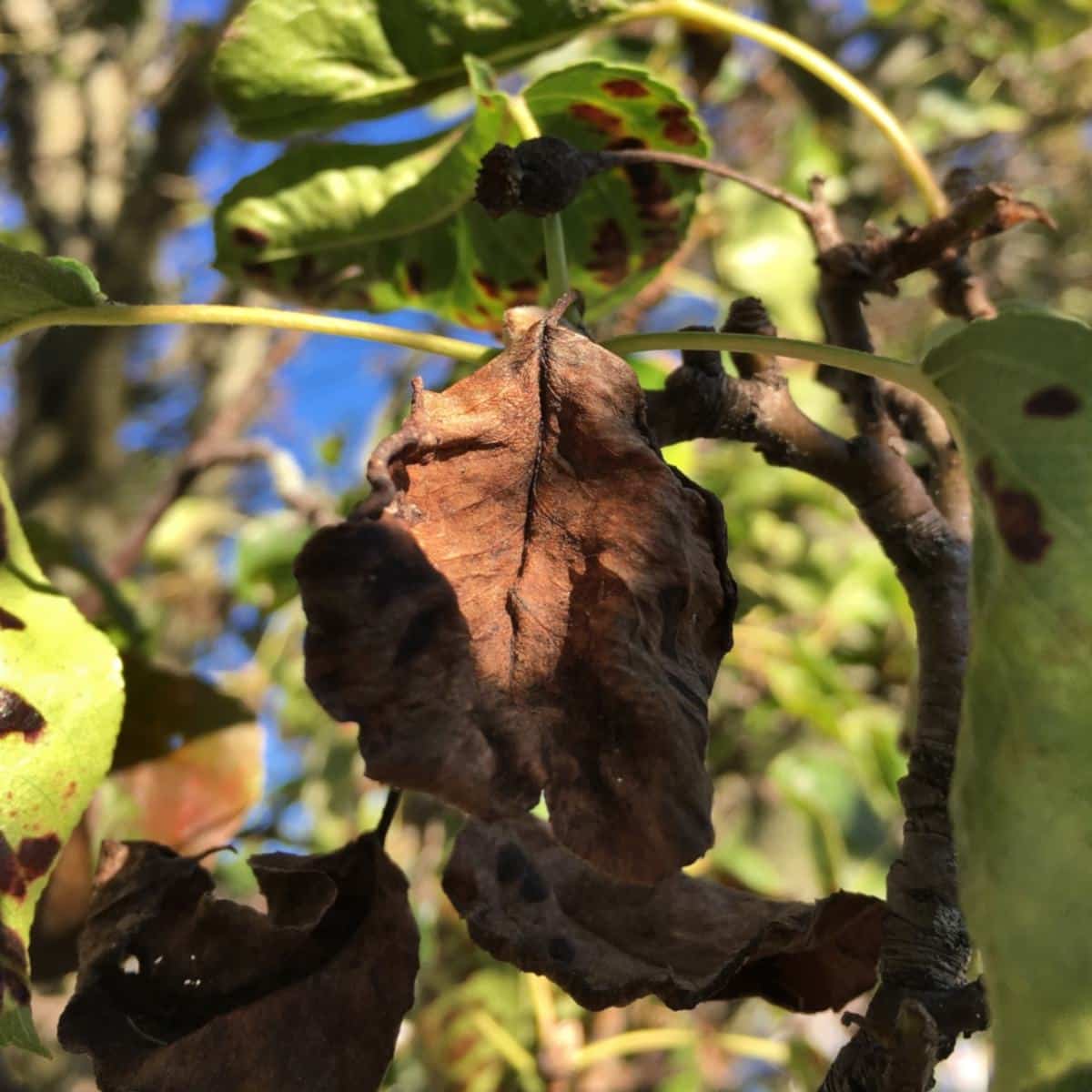
One of the first symptoms of fire blight is a watery light tan ooze that appears on. The fire blight bacteria overwinters in long narrow cankers on the tree and will present as wet-looking brown irregularly shaped elongated lesions that develop in the bark and outer sapwood of. Leaves with many leaf spots turn yellow and fall off the tree. Prune off these limbs at least 4 inches 10 cm below the diseased wood. Young leaves and shoots wilt and bend downward forming the shape of a hook.
 Source: homeguides.sfgate.com
Similarly limiting the amount of nitrogen fertilizer will reduce twig terminal growth. Leaf spots are first purple but eventually turn brown. The bacterium Erwinia amylovora causes fire blight in cherry laurel trees. Current years twigs often wilt and bend approximately 180 forming a shepherds crook. Fire blight is one of the most destructive diseases of fruit trees in North America.
 Source: planetnatural.com
Examples include strawberries raspberries roses apple trees pear trees and other members of the Rosaceae family. It is most prevalent on the following trees. This video is part of the Tree Fruit Disease Management Series produced by Michigan State University Professor and Extension Specialist Dr. Minimizing rapid growth and succulent tissue will reduce the risk of fire blight developing on the susceptible young succulent tissue. In Minnesota fire blight is most often seen on apple crabapple and mountain ash trees.
 Source: nature-and-garden.com
It occurs sporadically and unpredictably and occasionally reaches epidemic levels. The bacteria overwinters on or under infected bark and in the early spring begins to ooze out. Fire blight is a destructive disease caused by a bacterium Erwinia amylovora that thrives in the warm humid and rainy weather that coincides with the start of the growing season and it is easily spreadYou can identify fire blight by several characteristics. In the spring infected blossoms suddenly wilt and turn brown. Leaf spots are first purple but eventually turn brown.
 Source: extension.wsu.edu
If your cherry tree suffers drought stress or freeze damage it may come down with Leucostoma canker. Young leaves and shoots wilt and bend downward forming the shape of a hook. Similarly limiting the amount of nitrogen fertilizer will reduce twig terminal growth. In Minnesota fire blight is most often seen on apple crabapple and mountain ash trees. Fire blight is a bacterial infection that affects a wide variety of host plants including flowering cherry trees.
 Source: goodfruit.com
One of the first symptoms of fire blight is a watery light tan ooze that appears on. Many other members of the rose plant family as well as several stone fruits are also susceptible to this disease Table 1. Examples include strawberries raspberries roses apple trees pear trees and other members of the Rosaceae family. The bacteria overwinters on or under infected bark and in the early spring begins to ooze out. Fire Blight on Fruit Trees and Woody Ornamentals F ire blight caused by the bac-terium Erwinia amylovora is a common and destructive dis-ease of pear apple quince hawthorn firethorn cotoneaster and mountain ash.
 Source: independenttree.com
Fire Blight on Fruit Trees and Woody Ornamentals F ire blight caused by the bac-terium Erwinia amylovora is a common and destructive dis-ease of pear apple quince hawthorn firethorn cotoneaster and mountain ash. Cherry leaf spot can be a devastating disease for tart cherries. Later twigs and leaves also turn brown and appear to be scorched by fire hence the common name. In Minnesota fire blight is most often seen on apple crabapple and mountain ash trees. Trees that lose many leaves.
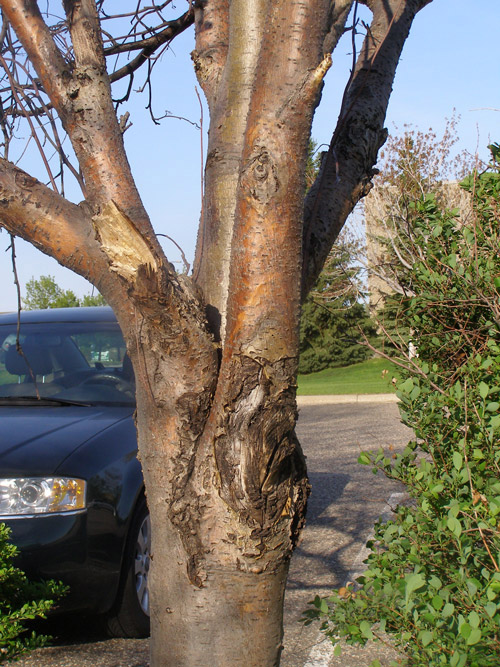 Source: extension.umn.edu
Fire Blight is a bacterial infection caused by the Erwinia amylovora bacteria. Similarly limiting the amount of nitrogen fertilizer will reduce twig terminal growth. Blossoms leaves twigs and branches of plants affected by fire blight can turn dark brown to black giving the appearance of having been scorched in a fire. Recognize it by the cankers that often ooze sap. In the spring infected blossoms suddenly wilt and turn brown.
 Source: russelltreeexperts.com
This video is part of the Tree Fruit Disease Management Series produced by Michigan State University Professor and Extension Specialist Dr. The disease destroys limbs at a minimum and if not caught destroys the entire tree. Fire blight is one of the most destructive diseases of fruit trees in North America. Many other members of the rose plant family as well as several stone fruits are also susceptible to this disease Table 1. Fire Blight on Fruit Trees and Woody Ornamentals F ire blight caused by the bac-terium Erwinia amylovora is a common and destructive dis-ease of pear apple quince hawthorn firethorn cotoneaster and mountain ash.
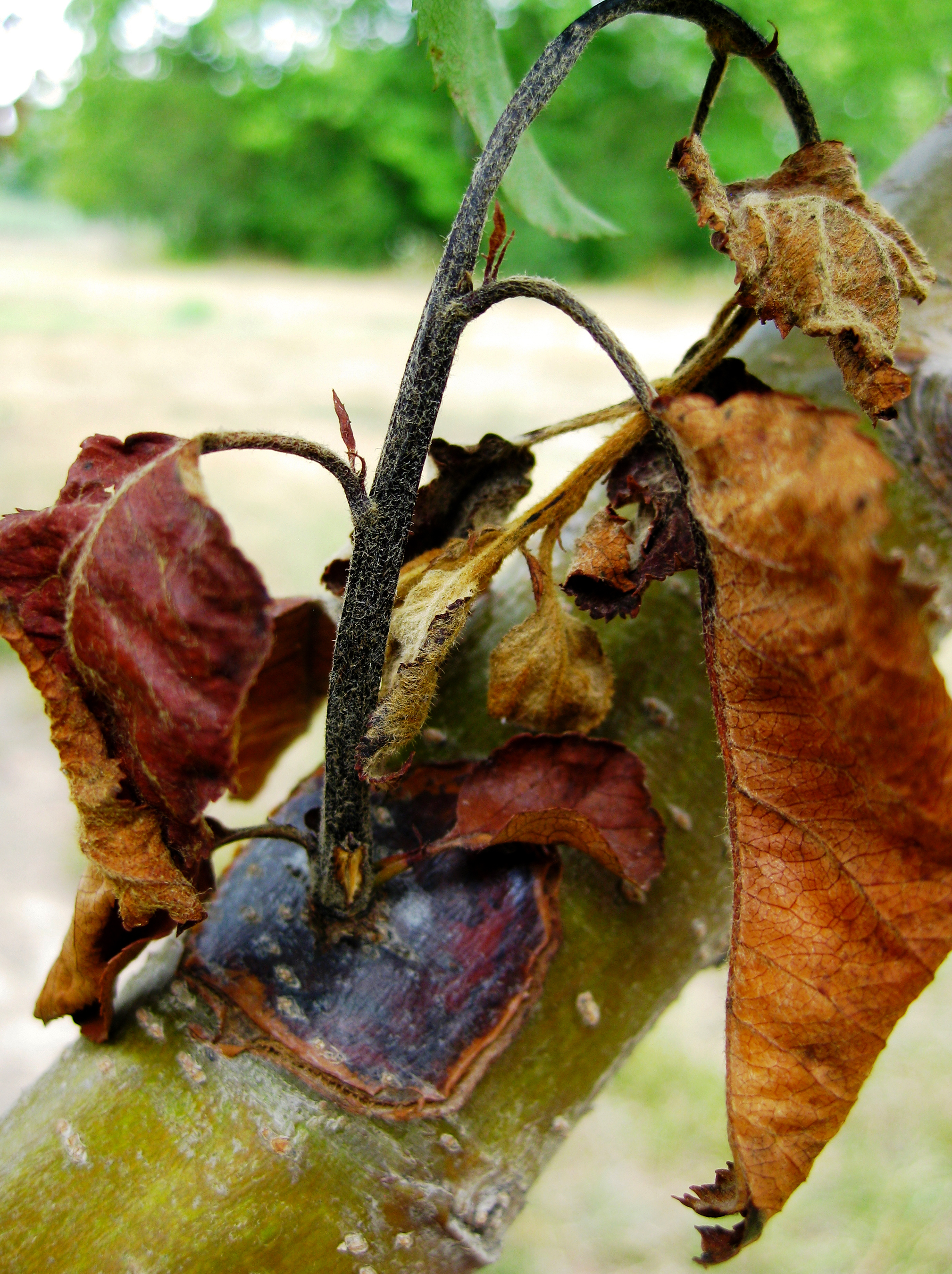 Source: purdue.edu
Severe fire blight can cause trees to die. The bacterium Erwinia amylovora causes fire blight in cherry laurel trees. Apple crabapple Malus species and firethorns Pyracantha species also are frequently damaged. Cherry trees are not the only vegetation prone to this bacterial infection. Severe fire blight can cause trees to die.
 Source: omafra.gov.on.ca
Apple pear hawthorn cotoneaster firethorn and mountain ash. One of the first symptoms of fire blight is a watery light tan ooze that appears on. This video is part of the Tree Fruit Disease Management Series produced by Michigan State University Professor and Extension Specialist Dr. Fire blight is a bacterial infection that affects a wide variety of host plants including flowering cherry trees. Current years twigs often wilt and bend approximately 180 forming a shepherds crook.
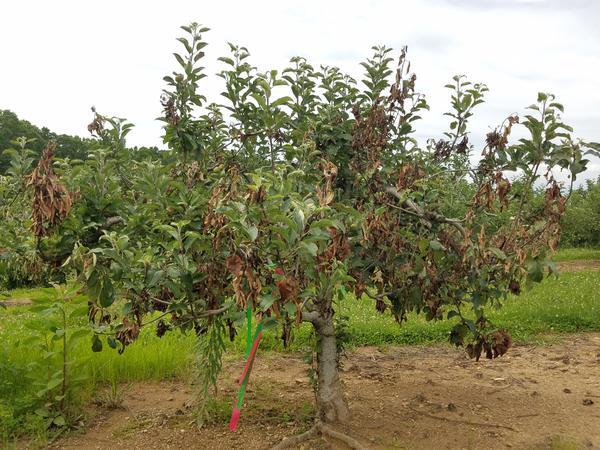 Source: content.ces.ncsu.edu
Fire Blight on Fruit Trees and Woody Ornamentals F ire blight caused by the bac-terium Erwinia amylovora is a common and destructive dis-ease of pear apple quince hawthorn firethorn cotoneaster and mountain ash. Examples include strawberries raspberries roses apple trees pear trees and other members of the Rosaceae family. Cherry leaf spot can be a devastating disease for tart cherries. Fire Blight on Fruit Trees and Woody Ornamentals F ire blight caused by the bac-terium Erwinia amylovora is a common and destructive dis-ease of pear apple quince hawthorn firethorn cotoneaster and mountain ash. In Minnesota fire blight is most often seen on apple crabapple and mountain ash trees.
Source: goodfruit.com
Leaves with many leaf spots turn yellow and fall off the tree. In Minnesota fire blight is most often seen on apple crabapple and mountain ash trees. Fire blight found in a variety. Similarly limiting the amount of nitrogen fertilizer will reduce twig terminal growth. This video is part of the Tree Fruit Disease Management Series produced by Michigan State University Professor and Extension Specialist Dr.
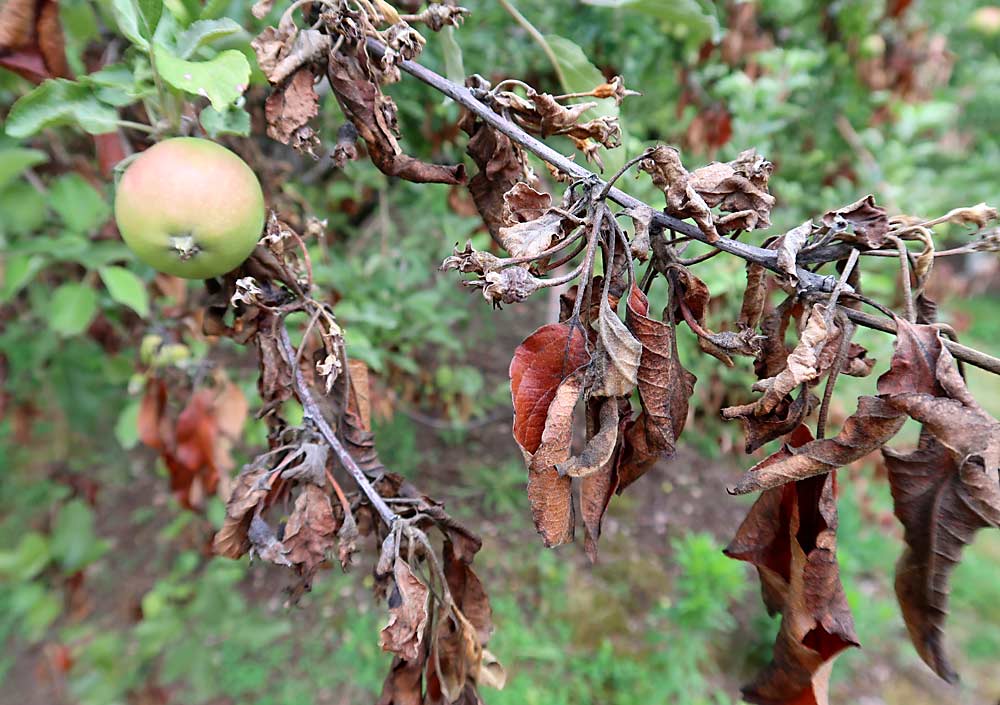 Source: goodfruit.com
Examples include strawberries raspberries roses apple trees pear trees and other members of the Rosaceae family. Current years twigs often wilt and bend approximately 180 forming a shepherds crook. Apple crabapple Malus species and firethorns Pyracantha species also are frequently damaged. It is most prevalent on the following trees. Recognize it by the cankers that often ooze sap.
 Source: groworganic.com
If your cherry tree suffers drought stress or freeze damage it may come down with Leucostoma canker. Fire blight is one of the most destructive diseases of fruit trees in North America. Annual pruning with avoidance of major cuts will help minimize tree vigor. Young leaves and shoots wilt and bend downward forming the shape of a hook. Trees that lose many leaves.
This site is an open community for users to submit their favorite wallpapers on the internet, all images or pictures in this website are for personal wallpaper use only, it is stricly prohibited to use this wallpaper for commercial purposes, if you are the author and find this image is shared without your permission, please kindly raise a DMCA report to Us.
If you find this site helpful, please support us by sharing this posts to your favorite social media accounts like Facebook, Instagram and so on or you can also bookmark this blog page with the title fire blight cherry tree by using Ctrl + D for devices a laptop with a Windows operating system or Command + D for laptops with an Apple operating system. If you use a smartphone, you can also use the drawer menu of the browser you are using. Whether it’s a Windows, Mac, iOS or Android operating system, you will still be able to bookmark this website.


