Your Red spots on apple tree leaves images are ready. Red spots on apple tree leaves are a topic that is being searched for and liked by netizens now. You can Download the Red spots on apple tree leaves files here. Find and Download all royalty-free images.
If you’re looking for red spots on apple tree leaves pictures information connected with to the red spots on apple tree leaves topic, you have visit the ideal blog. Our site frequently provides you with hints for downloading the highest quality video and image content, please kindly surf and find more informative video content and graphics that fit your interests.
Red Spots On Apple Tree Leaves. Frogeye leaf spots Botryosphaeria obtusa on apple leaves. Scab infection on a leaf. On the fruit the lesions are dark often black firm and not sunken. What is eating the leaves of my tree.
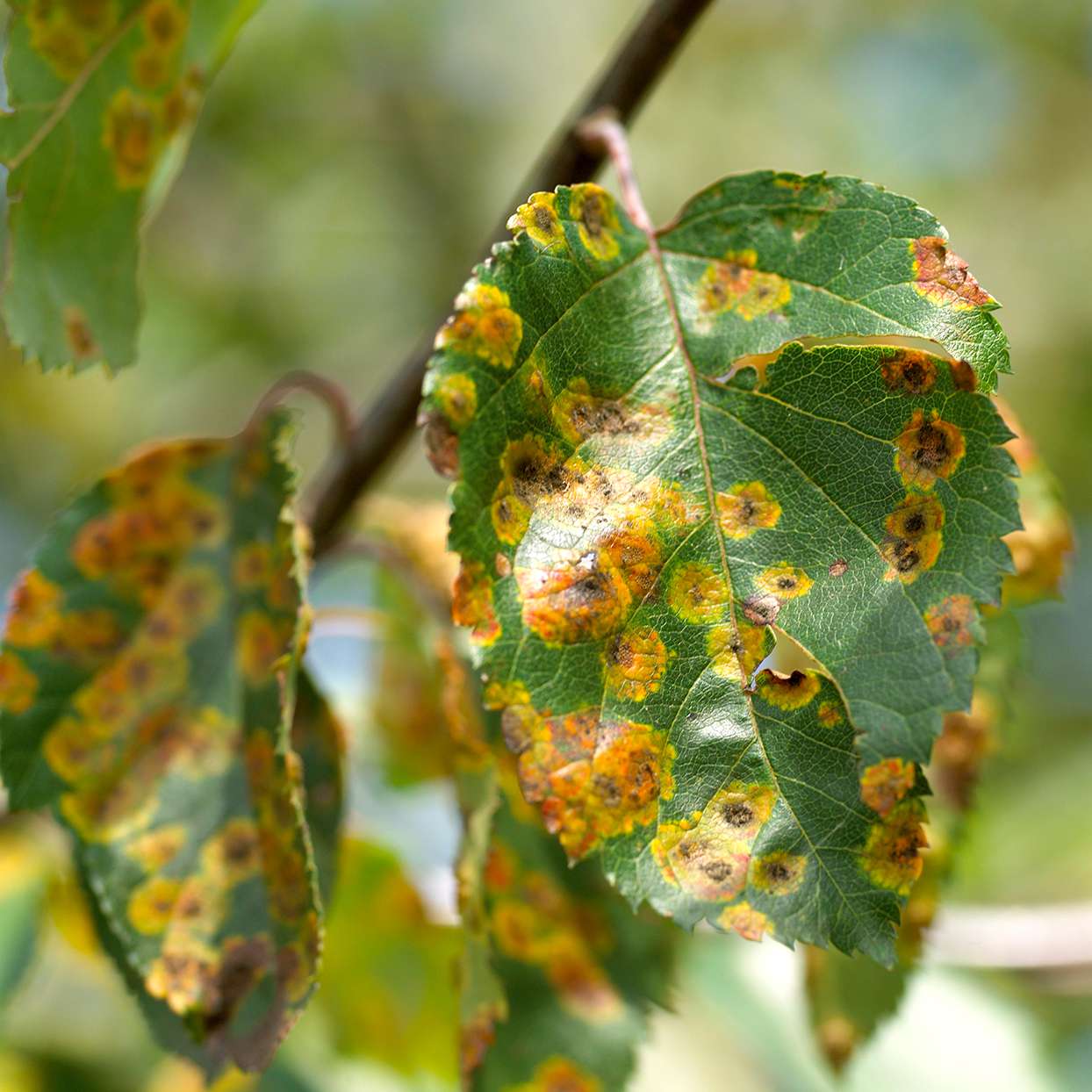 Diagnose Tree Disease Better Homes Gardens From bhg.com
The caterpillars of a number of moth species will eat the leaves of apple trees. Tank - mixing with Topsin M improves effectiveness. Leaf spots are purple with tan centers. The 18 inch spots are referred to as frogeye leaf spot. Apple trees Malus domestica grow in full sun in US. It can also affect the fruit see below.
Small raised black dots form in the center of leaf spots.
The spots are less than 6 mm 14 inch in diameter and are darker at the edges than at the centre. Residual salts in the soil from excess fertilizer can affect roots and lead to spotting symptoms. Infected fruit mummify and often remain attached to the tree. The fruit of young apple trees affected by frogeye leaf spot may blacken and rot on the tree. Spots develop primarily on the leaves in mid- to late spring. What is eating the leaves of my tree.
 Source: organicgrowersschool.org
The orange spots on your apple trees are a type of rust. Greenish-yellow spots on the leaves of apple and crabapple Early June Change in the color of the spots orange to red depending on the cultivar Spots on the upper and lower surface of the leaves Formation of spore cups aecia on the lower surface of the leaves. Infected fruit mummify and often remain attached to the tree. These gradually enlarge to bright orange-yellow spots which make the disease easy to identify. Rosy apple aphid is a frequent pest and causes yellowish green curled leaves.
 Source: omafra.gov.on.ca
Leaf spot diseases weaken trees and shrubs by interrupting photosynthesis. Leaf spots are purple with tan centers. Apples are susceptible to three kinds of rust. It can also affect the fruit see below. Looking like miniature deep red apples the tart flavor.
 Source: omafra.gov.on.ca
Leaf spot diseases should be taken seriously if they result in moderate to complete leaf loss two to four years in a row. Spots on Crabapple Leaves. Apple scab is recognized by the brown or olive green spots on leaves and the black spots on fruit. McIntosh Cortland and Macoun are very susceptible to scab. The caterpillars of a number of moth species will eat the leaves of apple trees.
 Source: organicgrowersschool.org
Looking like miniature deep red apples the tart flavor. A number of Leaf Spot diseases produce muted spots that resemble those of fungal rust. Infected fruit is often small and distorted. Pest infestations may cause mottled spotting. Severe defoliation can lead to reduced bloom the next season.
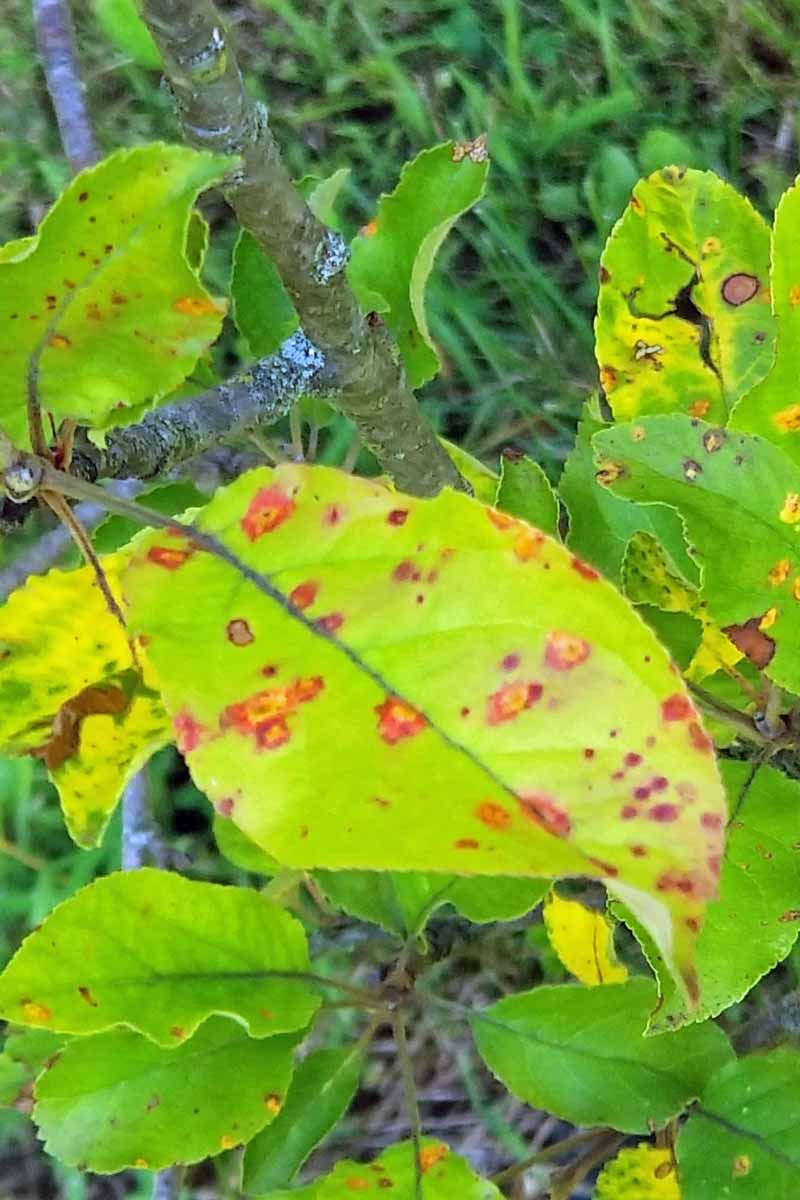 Source: gardenerspath.com
On the fruit the lesions are dark often black firm and not sunken. The fruit of young apple trees affected by frogeye leaf spot may blacken and rot on the tree. Small raised black dots form in the center of leaf spots. Department of Agriculture plant hardiness zones 3 through 9 depending on the cultivar. Infected fruit is often small and distorted.
 Source: dreamstime.com
Captan is the most effective material. Tiny Yellow Spots on Apple Tree Leaves. Scab infection on a leaf. The 18 inch spots are referred to as frogeye leaf spot. Frogeye leaf spot is caused by Botryosphaeria obtusa fungus.
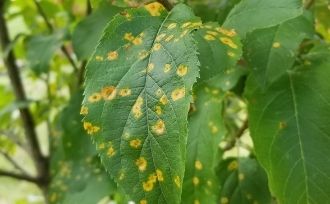 Source: starkbros.com
Scab infection on a leaf. Most leaf spot diseases affect only a small percentage of the trees overall leaf area and are a minor stress on the health of the tree. Severe defoliation can lead to reduced bloom the next season. Obviously this stresses the trees. The spots are less than 6 mm 14 inch in diameter and are darker at the edges than at the centre.
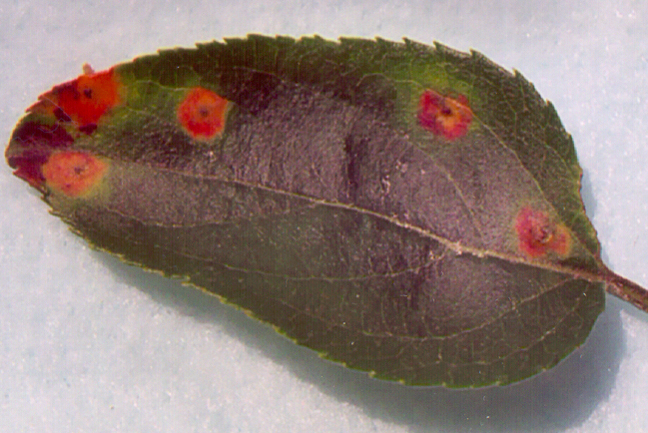 Source: extension.umaine.edu
Looking like miniature deep red apples the tart flavor. Small raised black dots form in the center of leaf spots. Greenish-yellow spots on the leaves of apple and crabapple Early June Change in the color of the spots orange to red depending on the cultivar Spots on the upper and lower surface of the leaves Formation of spore cups aecia on the lower surface of the leaves. The fruit of young apple trees affected by frogeye leaf spot may blacken and rot on the tree. Orange spots may develop on the fruit as well.
 Source: ag.umass.edu
Infected fruit mummify and often remain attached to the tree. Apples are susceptible to three kinds of rust. Leaves and fruit can drop from the tree. Scab infection on a leaf. In severe cases scab causes defoliation which weakens the tree and inhibits flower formation.
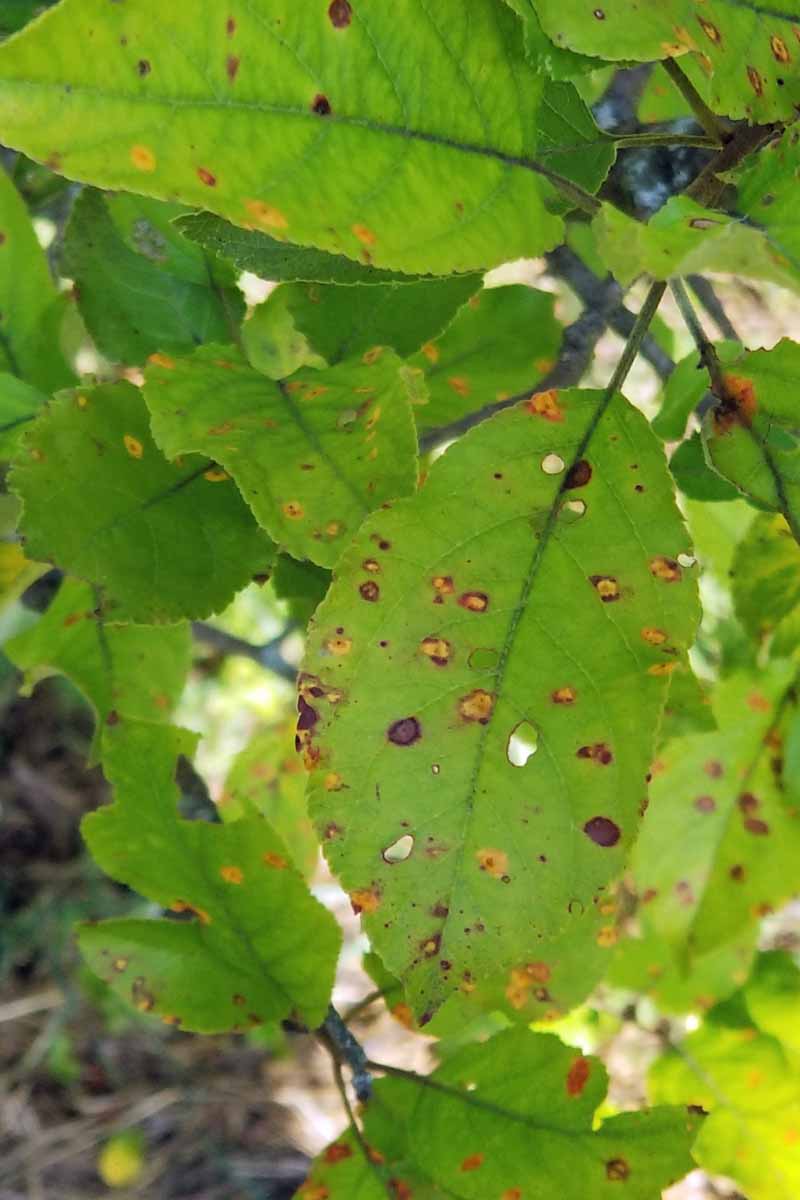 Source: gardenerspath.com
The 18 inch spots are referred to as frogeye leaf spot. The orange spots on your apple trees are a type of rust. Brown spots and speckling on leaves may be due to incorrect pH and the lack or overdose of specific nutrients. Captan is the most effective material. The 18 inch spots are referred to as frogeye leaf spot.
 Source: planetnatural.com
Cedar apple rust quince rust and hawthorn rust. Heavily infected trees develop chlorosis and can drop all their leaves. McIntosh Cortland and Macoun are very susceptible to scab. Department of Agriculture plant hardiness zones 3 through 9 depending on the cultivar. Looking like miniature deep red apples the tart flavor.
 Source: davesgarden.com
Brown spots and speckling on leaves may be due to incorrect pH and the lack or overdose of specific nutrients. On apple and crab-apple trees look for pale yellow pinhead sized spots on the upper surface of the leaves shortly after bloom. McIntosh Cortland and Macoun are very susceptible to scab. Leaf spots are first yellow then turn bright orange-red often with a bright red border. Leaf spot diseases should be taken seriously if they result in moderate to complete leaf loss two to four years in a row.
 Source: spring-green.com
These gradually enlarge to bright orange-yellow spots which make the disease easy to identify. It can also affect the fruit see below. The orange spots on your apple trees are a type of rust. Disease is most common on apple and crabapple. The Rust will next appear on the fruit about two weeks after the spots on.
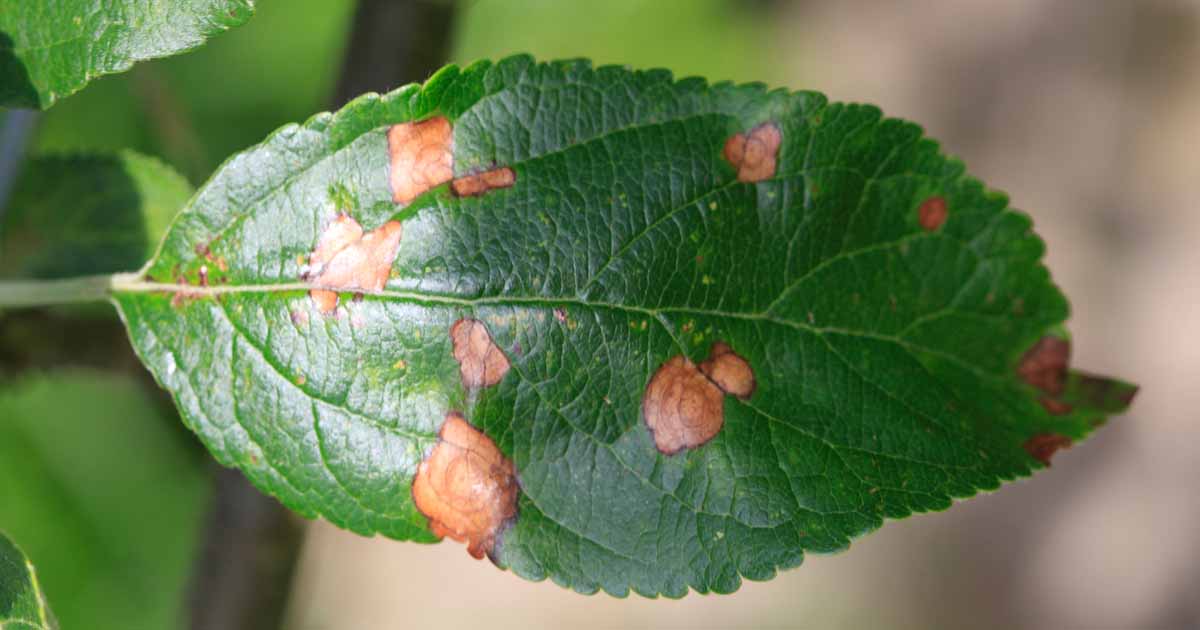 Source: gardenerspath.com
A number of Leaf Spot diseases produce muted spots that resemble those of fungal rust. The leaf spots are the first visible symptom to develop on the apple trees. The fruit of young apple trees affected by frogeye leaf spot may blacken and rot on the tree. Leaf spot diseases weaken trees and shrubs by interrupting photosynthesis. Captan is the most effective material.
Source: bhg.com
Severe defoliation can lead to reduced bloom the next season. The orange spots on your apple trees are a type of rust. Disease is most common on apple and crabapple. Frogeye leaf spot is caused by Botryosphaeria obtusa fungus. Captan is the most effective material.
This site is an open community for users to do submittion their favorite wallpapers on the internet, all images or pictures in this website are for personal wallpaper use only, it is stricly prohibited to use this wallpaper for commercial purposes, if you are the author and find this image is shared without your permission, please kindly raise a DMCA report to Us.
If you find this site adventageous, please support us by sharing this posts to your preference social media accounts like Facebook, Instagram and so on or you can also save this blog page with the title red spots on apple tree leaves by using Ctrl + D for devices a laptop with a Windows operating system or Command + D for laptops with an Apple operating system. If you use a smartphone, you can also use the drawer menu of the browser you are using. Whether it’s a Windows, Mac, iOS or Android operating system, you will still be able to bookmark this website.