Your Spanish moss and oak tree relationship images are available in this site. Spanish moss and oak tree relationship are a topic that is being searched for and liked by netizens now. You can Find and Download the Spanish moss and oak tree relationship files here. Download all free images.
If you’re looking for spanish moss and oak tree relationship pictures information related to the spanish moss and oak tree relationship interest, you have visit the right site. Our website frequently gives you hints for viewing the highest quality video and image content, please kindly hunt and locate more enlightening video content and graphics that match your interests.
Spanish Moss And Oak Tree Relationship. Often they mistake them for Spanish Moss. Lichens on trees are a symbiotic relationship between fungus and algae. The fungus grows on the tree bark and collects moisture which the algae needs. The bark of trees such as the live oak provides a stable surface for lichen growth.
 Spanish Moss Chiggers From homeguides.sfgate.com
Quejigal is a woodland largely made up of quejigo the semi-deciduous Lusitanian oak or Algerian oak. Lichens may in. A dying tree will gradually. Most bromeliads including Spanish moss are epiphytes. However it does absorb moisture and it loves humidity so sometimes the added moisture can weigh down tree branches and cause them to break off. Spanish Moss Tillandsia usneoides is a nonparasitic plant that is supported by another plant and has aerial roots to capture moisture from the atmosphere.
An example of Commensalism in a temperate forest is moss growing on a tree.
Lichens on trees are a symbiotic relationship between fungus and algae. The relationship between Spanish moss and its host tree is best described as a commensalism. The tree isnt affected by the growing of the moss so it is a Commensalism relationship. Also it does not need roots for water and nutrient uptake since all parts of Spanish moss have that ability. Go to example of ant-acaica Plantanimal interaction. Spanish moss can be found across the southeast from Florida to Texas and north to Arkansas and Virginia.
 Source: explorebeaufortsc.com
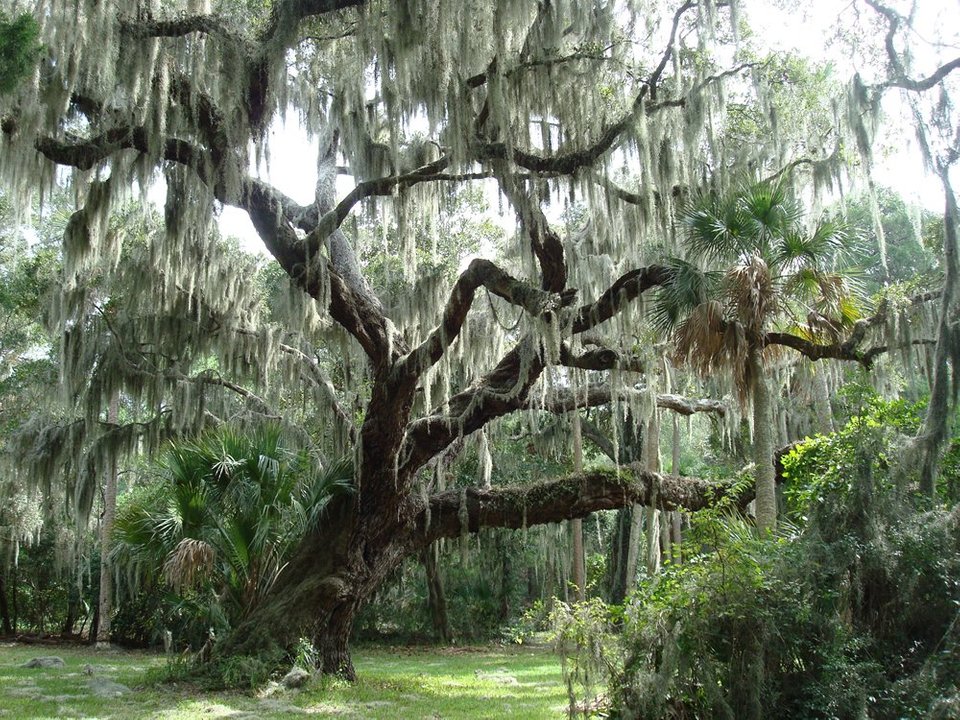
The host tree neither gains nor loses by their presence. It was hypothesized that the relationship would be commensalism with Spanish moss benefited and the Southern live oak neither benefited nor harmed. Up until around 1960 Spanish moss was used for all sorts of everyday items such as stuffing for car seats and furniture. Spanish moss spreads to new locations through various methods. Although too much Spanish Moss can deprive trees of sunlight and thereby reduce their growth healthy trees grow faster than.
 Source: saltmagazinenc.com
Encinar is largely comprised of holm oaks known as encina. Spanish moss is a flowering plant not a true moss and it is an epiphyte drawing water and nutrients from the air. Seeds are structured so that they are easily caught by the wind and land in the bark of new trees. Spanish moss is commonly found on oak and cypress trees but can grow on other plants as well. Native Americans would use Spanish moss to make bedding.
 Source: pinterest.com
Spanish moss is commonly found on oak and cypress trees but can grow on other plants as well. Spanish Moss does not harm healthy trees that receive regular maintenance. Ecologists call this kind of relationship commensalism. The relationship between Spanish moss and its host tree is best described as a commensalism. Epiphytes grow on other plants but do not rely on them for nutrients.
 Source: haikudeck.com
Lichens may in. The relationship between Spanish moss and the trees it colonizes is an example of symbiosis. Spanish Moss does not harm healthy trees that receive regular maintenance. The tree isnt affected by the growing of the moss so it is a Commensalism relationship. Spanish moss is an atmospheric epiphyte and the Southern live oak is a hardwood tree.
 Source: matthewmeierphoto.photoshelter.com
Go to example of ant-acaica Plantanimal interaction. It does not harm the tree or extract nutrients. The lichen that decorates them is called Spanish moss Ramalina menziesii. An example of Commensalism in a temperate forest is moss growing on a tree. The Spanish moss is able to absorb water and nutrients from the air through the long moss hairs not from the tree.
 Source: bromeliads.info
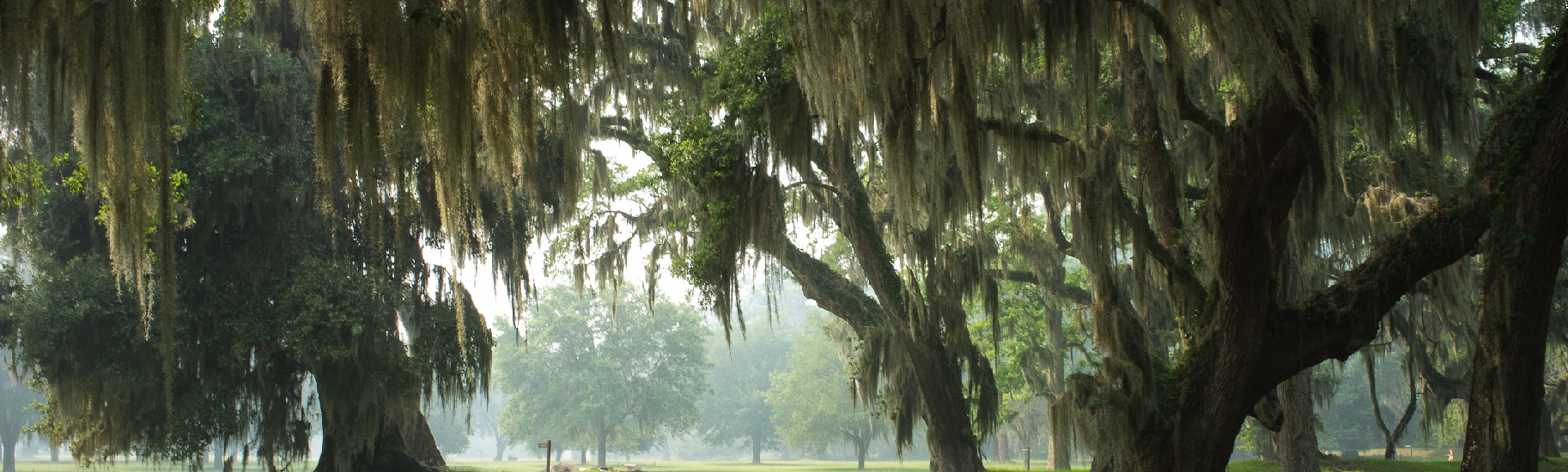
The bark of trees such as the live oak provides a stable surface for lichen growth. Photo courtesy Phil Heim Spanish moss was once used for everyday items. Up until around 1960 Spanish moss was used for all sorts of everyday items such as stuffing for car seats and furniture. Likewise does Spanish moss only grow on oak trees. Many park visitors admire the beautiful grey-green sheaths that drape down from the branches of oak trees and sway in the wind.
 Source: birdsandblooms.com
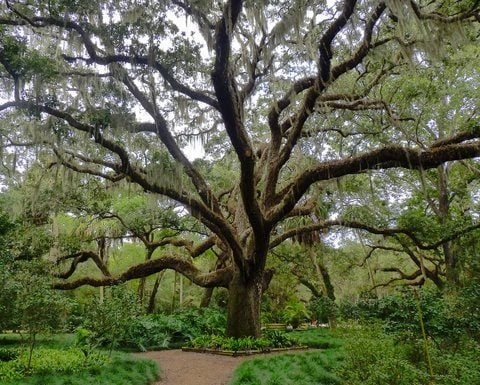
Spanish moss spreads to new locations through various methods. This adaptation is why Spanish moss does not need roots. It was hypothesized that the relationship would be commensalism with Spanish moss benefited and the Southern live oak neither benefited nor harmed. The tree isnt affected by the growing of the moss so it is a Commensalism relationship. Up until around 1960 Spanish moss was used for all sorts of everyday items such as stuffing for car seats and furniture.
 Source: haikudeck.com
Lichens may in. Another common misconception is that Spanish moss contains chiggers also known as. The fungus grows on the tree bark and collects moisture which the algae needs. Does moss on a tree mean its dying. These relationships are similar in that they both have two organisms living together.
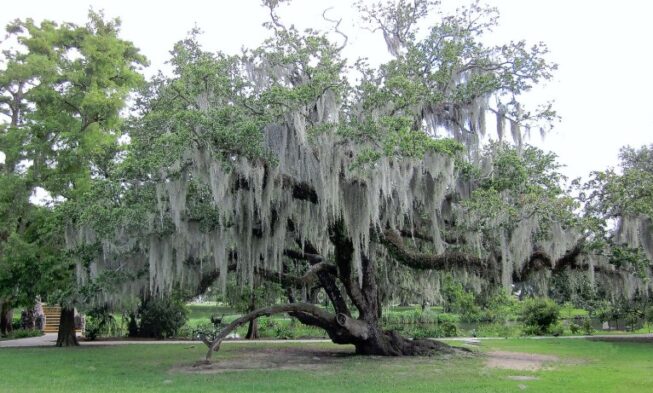 Source: runtedrun.com
The bark of trees such as the live oak provides a stable surface for lichen growth. The relationship between Spanish moss and the trees it colonizes is an example of symbiosis. Does moss on a tree mean its dying. Most bromeliads including Spanish moss are epiphytes. This adaptation is why Spanish moss does not need roots.
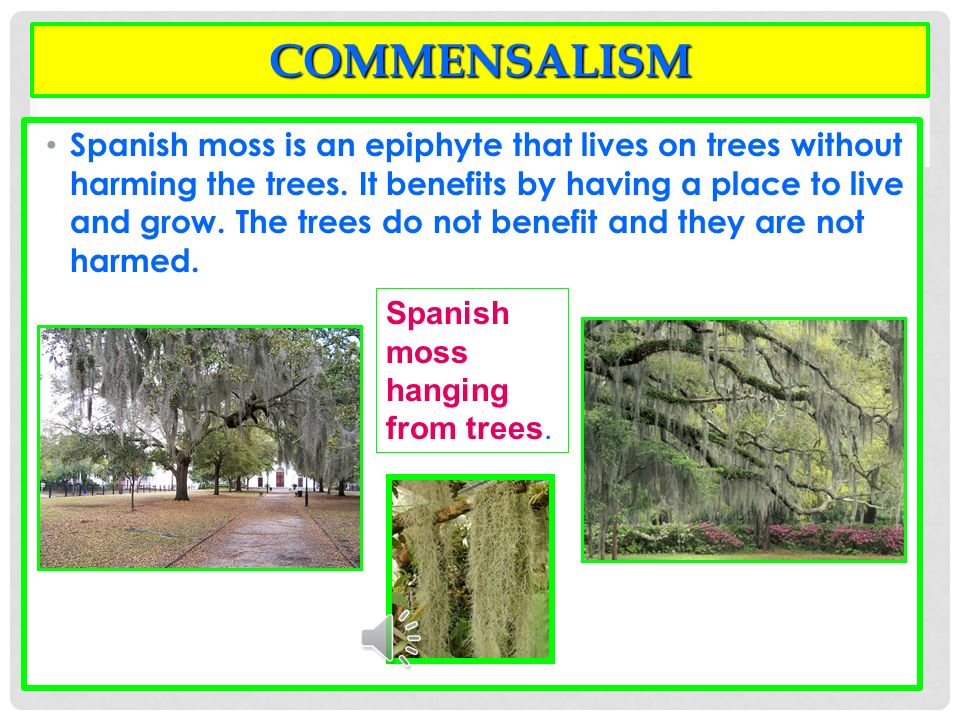 Source: slideplayer.com
Ecologists call this kind of relationship commensalism. The relationship moss has with trees is actually opportunistic and has little to no impact on the health of the tree. The relationship between Spanish moss and the trees it colonizes is an example of symbiosis. An example of this is Spanish moss growing on the branches of an oak tree. This adaptation is why Spanish moss does not need roots.
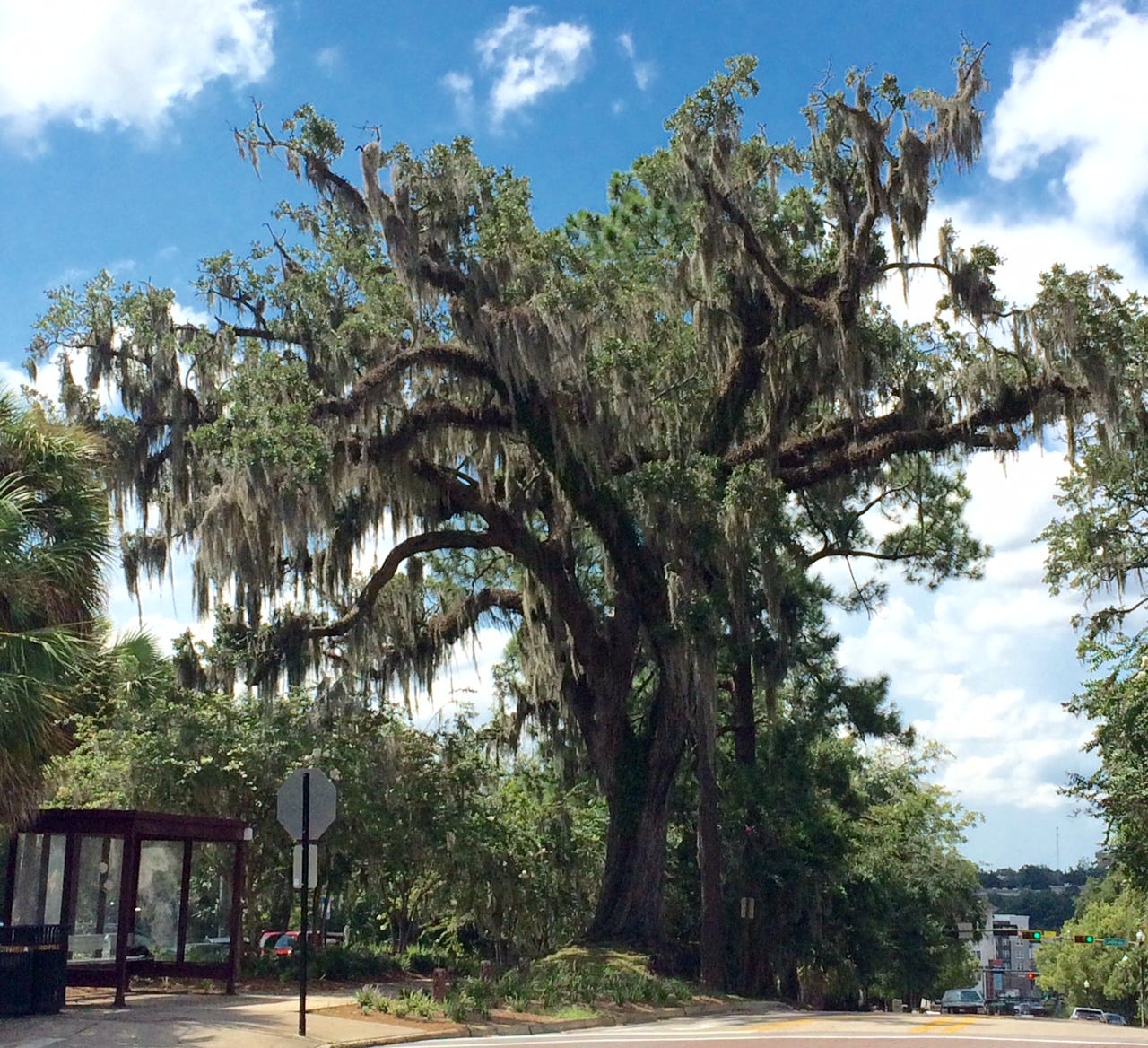 Source: tallahassee.com
Despite its name Spanish moss is not a moss but a bromeliada perennial herb in the pineapple family. Most bromeliads including Spanish moss are epiphytes. Hanging off trees and landscape plants Spanish moss is a familiar part of Floridas environment. Epiphytes are distinct from parasitic plants in that they make their own food so they do not harm the host tree. This adaptation is why Spanish moss does not need roots.
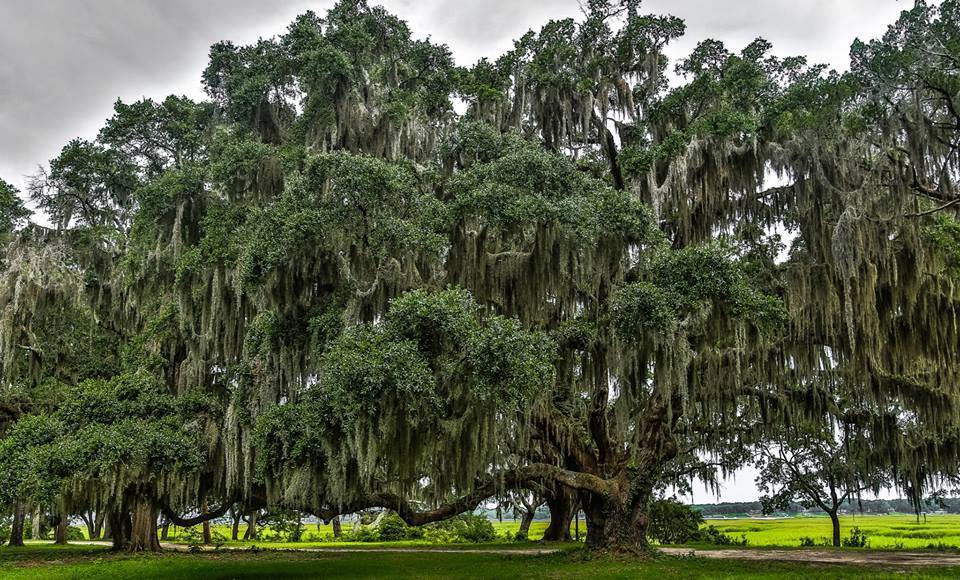 Source: explorebeaufortsc.com
An ecological relationship in which one species benefits and the other is neither helped nor harmed. Epiphytes grow on other plants but do not rely on them for nutrients. Ecologists call this kind of relationship commensalism. A dying tree will gradually. The tree isnt affected by the growing of the moss so it is a Commensalism relationship.
 Source: pinterest.com
Lichens may in. Hanging off trees and landscape plants Spanish moss is a familiar part of Floridas environment. Photo courtesy Phil Heim Spanish moss was once used for everyday items. This adaptation is why Spanish moss does not need roots. The oak tree is not affected but the Spanish moss benefits by being higher up away from most herbivores and also in the light Spanish moss is photosynthetic so is not a parasite.
Source: homeguides.sfgate.com
Another common misconception is that Spanish moss contains chiggers also known as. Most bromeliads including Spanish moss are epiphytes. Most bromeliads including Spanish moss are epiphytes. Once there the plant will continue to propagate vegetatively. Spanish Moss does not harm healthy trees that receive regular maintenance.
 Source: moomoomathblog.com
The Spanish moss is able to absorb water and nutrients from the air through the long moss hairs not from the tree. Spanish moss is an atmospheric epiphyte and the Southern live oak is a hardwood tree. Most bromeliads including Spanish moss are epiphytes. Relationship would be Spanish moss growing on a live oak tree. The Spanish moss is able to absorb water and nutrients from the air through the long moss hairs not from the tree.
This site is an open community for users to share their favorite wallpapers on the internet, all images or pictures in this website are for personal wallpaper use only, it is stricly prohibited to use this wallpaper for commercial purposes, if you are the author and find this image is shared without your permission, please kindly raise a DMCA report to Us.
If you find this site beneficial, please support us by sharing this posts to your preference social media accounts like Facebook, Instagram and so on or you can also bookmark this blog page with the title spanish moss and oak tree relationship by using Ctrl + D for devices a laptop with a Windows operating system or Command + D for laptops with an Apple operating system. If you use a smartphone, you can also use the drawer menu of the browser you are using. Whether it’s a Windows, Mac, iOS or Android operating system, you will still be able to bookmark this website.